
Marine Lithium Batteries for Professional Applications
Marine lithium batteries must meet the specific operating requirements of professional equipment: operating time, available power, weight, size, safety and integration.
SOLISE evaluates LiFePO4 and NMC technologies according to your technical specifications. The choice depends on the operating profile, current demand, cycle life, charging method, marine environment and available space for battery pack integration.
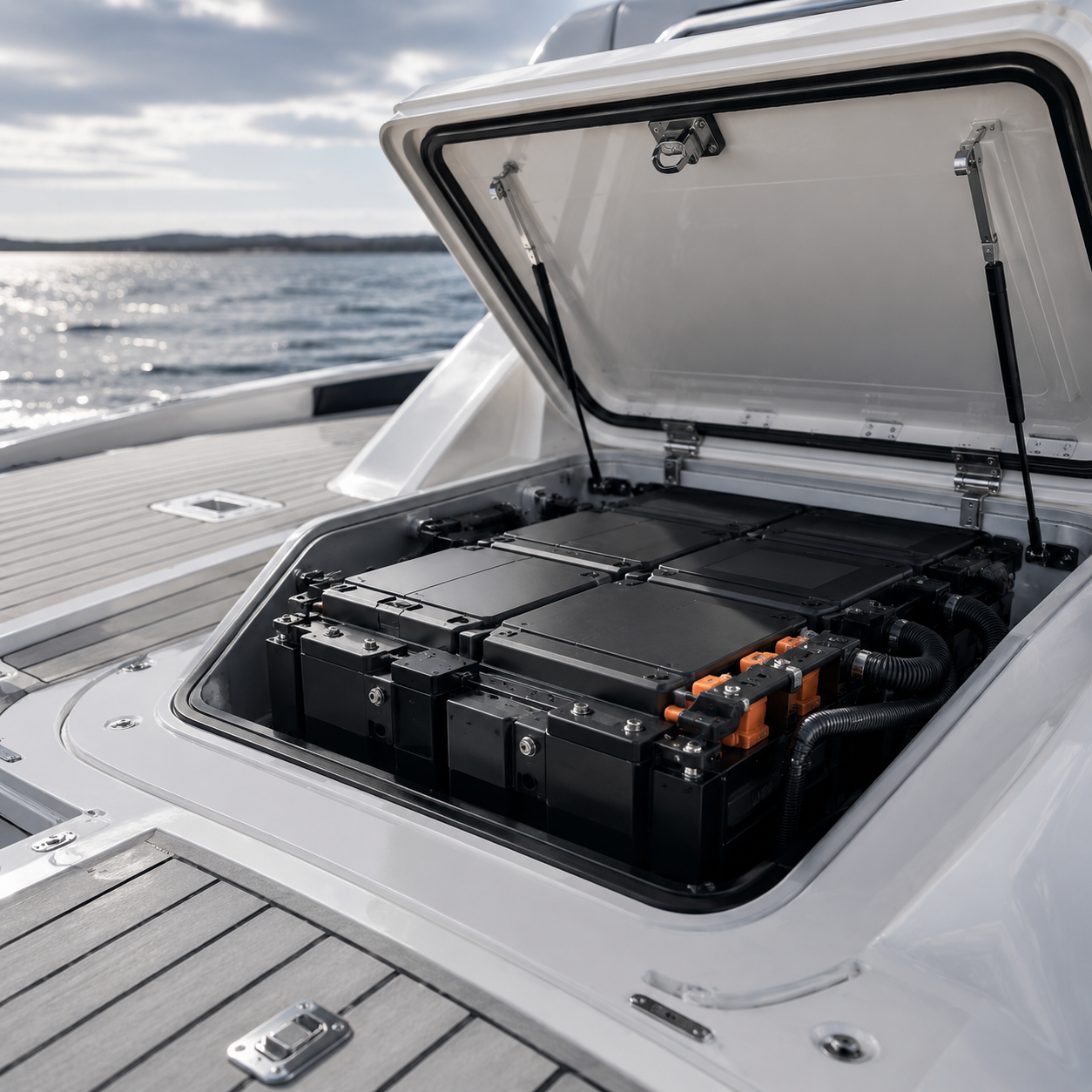
Choosing the Right Lithium Technology for Marine Applications
SOLISE compares LiFePO4 and NMC technologies according to your equipment’s technical specifications. Several factors must be considered: operating time, cycle life, current demand, safety, charging requirements, weight, marine operating conditions and integration into the equipment.
Lithium Iron Phosphate
This technology is often preferred for marine applications when safety, service life, thermal stability and repeated charging cycles are key priorities.
Nickel Manganese Cobalt
For compact marine equipment, NMC can be considered when more energy needs to be stored within a limited space or when weight restrictions are significant.
SOLISE Note: these figures are indicative and refer to cell-level performance. In practice, battery performance in marine applications depends on the battery pack architecture, BMS, wiring, mechanical enclosure, current demand, temperature, charging method and integration into the equipment.
Lithium Battery Applications in the Marine Sector
Requirements for marine lithium batteries vary depending on the type of equipment and its operating conditions. Electric propulsion systems may require high power output, while autonomous buoys prioritise extended operating time. Marine robots, onboard electronics and monitoring instruments introduce further requirements relating to weight, cycle life, compactness and integration.
Electric boats and vessels require batteries sized according to their operating profile, with suitable power delivery, operating time and high-current capability.
Navigation instruments, communication devices and control systems benefit from a stable power supply and a compact battery suited to limited installation space.
Surface robots and underwater systems often have strict weight and space constraints. Their battery must also support onboard power demands and the required operating time.
For remote buoys, beacons and autonomous installations, long-term energy availability and limited maintenance are essential considerations.
Sensors and data acquisition systems depend on reliable power over their operating periods, particularly when integrated into unattended marine monitoring equipment.
From Requirements Analysis to Ongoing Technical Support
SOLISE supports manufacturers and designers of marine equipment in selecting, sizing and integrating marine lithium batteries. Each project is assessed against specific operating requirements: operating time, cycle life, current demand, safety, charging, connectors and marine environmental conditions.
We assess your technical specifications: voltage, required operating time, continuous current, peak currents, cycle life, charging method, target weight, available space, connectors and operating conditions.
Equipment requirements are defined before selecting the battery technology and pack architecture.
Based on your requirements, SOLISE compares LiFePO4 and NMC technologies. Each solution is evaluated in terms of operating time, cycle life, available power, safety, weight, compactness and charging method.
The selected technology matches the actual use of the marine equipment and its integration requirements.
We assess the battery pack architecture: capacity, discharging current, charging current, BMS, wiring, connectors, protective systems and mechanical integration into the equipment.
The battery solution is specified to achieve the right balance between operating time, power, service life, weight and safety.
Our support does not end with delivery. SOLISE answers technical questions, provides product follow-up and can assist with changes to the equipment or project.
Technical support remains available over time if questions arise or the project evolves.
Your Marine Lithium Battery Project
Are you developing a boat, marine robot, autonomous buoy, onboard system or other marine equipment with specific requirements for operating time, cycle life, current demand, charging or battery integration? Our team is available to discuss your project and help you select the most suitable lithium battery technology for your application.
Contact UsFrequently Asked Questions About Marine Lithium Batteries
Choosing a lithium battery for marine equipment depends on its application, required operating time, power demand, cycle life, charging method, integration requirements and operating conditions.
Lithium Batteries for Marine Applications
Which marine equipment can be powered by lithium batteries?
A wide range of equipment can use lithium batteries, including electric boats, propulsion systems, onboard devices, navigation instruments, marine robots, underwater drones, buoys, beacons, sensors and autonomous systems.
Which technical requirements matter most for marine applications?
Key information includes operating voltage, average power consumption, continuous current, peak currents, required operating time, cycle life, charging time, weight limitations, dimensions and operating conditions.
Why are lithium batteries used in marine equipment?
Compared with many conventional battery technologies, lithium solutions can store considerable energy in a relatively compact and lightweight format. Depending on the chemistry selected, they can also offer a long service life and meet demanding power requirements.
Can one battery type suit every marine application?
No. Electric propulsion, autonomous buoys, marine robots and navigation equipment have different requirements. The selected battery technology and capacity must therefore match the equipment’s actual operating profile.
Choosing Between LiFePO4 and NMC
How do LiFePO4 and NMC batteries differ?
In which situations is LiFePO4 the preferred option?
For marine equipment used regularly, LiFePO4 is particularly suitable when service life, thermal stability and repeated charge cycles are important considerations.
When is an NMC battery worth considering?
NMC can be considered for applications that require substantial stored energy while maintaining a compact and lightweight battery design.
Battery Sizing and Operating Time
How is a battery sized for marine equipment?
Correct battery sizing depends on system voltage, power consumption, required operating time, continuous current, peak currents, cycle life and available space.
How can the required operating time be calculated?
The required operating time is calculated using the equipment’s actual power consumption and the intended duration of use. For comparing available energy between batteries, watt-hours are more useful than ampere-hours alone.
Why must peak current demands be considered?
Motors, pumps, thrusters and actuators may require currents significantly higher than their average consumption. Both the magnitude and duration of these peaks must be considered when specifying the cells, BMS, cables and connectors.
Which details are needed to specify a battery?
The main information required includes voltage, continuous current, peak currents, required operating time, available dimensions, target weight, charging method, connectors and operating conditions.
Integration and Safety at Sea
Which environmental conditions affect battery integration?
Humidity, water splashes, temperature variations, vibrations and exposure to saltwater environments must be considered during integration. The required level of protection depends on the installation location and actual operating conditions.
What does a lithium battery BMS do?
The Battery Management System (BMS) monitors the cells and protects the battery against certain abnormal conditions, such as overvoltage, undervoltage, overcurrent or temperatures outside the permitted operating range.
Is it possible to keep an existing charger?
An existing charger may be retained if its voltage, charging current and charging profile are compatible with the lithium battery chemistry and BMS.
Can solar panels be used to charge lithium batteries?
Yes, provided that a compatible charge controller or charging system is used. The system must take into account the battery pack voltage, lithium chemistry and electrical characteristics.
Why is UN 38.3 testing important?
UN 38.3 specifies tests required for the transport of lithium batteries. These tests do not replace a technical assessment of the battery pack or validation of its integration into the final equipment. For maritime transport, further information is available on the IMO’s official page on the IMDG Code.
SOLISE Solutions and Technical Support
Are standard and custom batteries available from SOLISE?
Yes. Depending on your requirements, SOLISE can supply a standard lithium battery or assess a custom lithium battery tailored to the operating requirements of your marine equipment.
Can an existing marine device be fitted with a different battery?
Yes. SOLISE can assess the electrical characteristics, available space, connectors, charging method and operating conditions to identify a suitable solution.
Which project details should be sent to SOLISE?
Voltage, power consumption, maximum currents, required operating time, available dimensions, target weight, charging requirements, connectors and operating conditions provide a useful starting point for discussing your project.
How do I contact SOLISE about a marine project?
To discuss your application and the main requirements of your equipment, contact our team directly at client@solise.eu.