
What is a LiPo Battery?
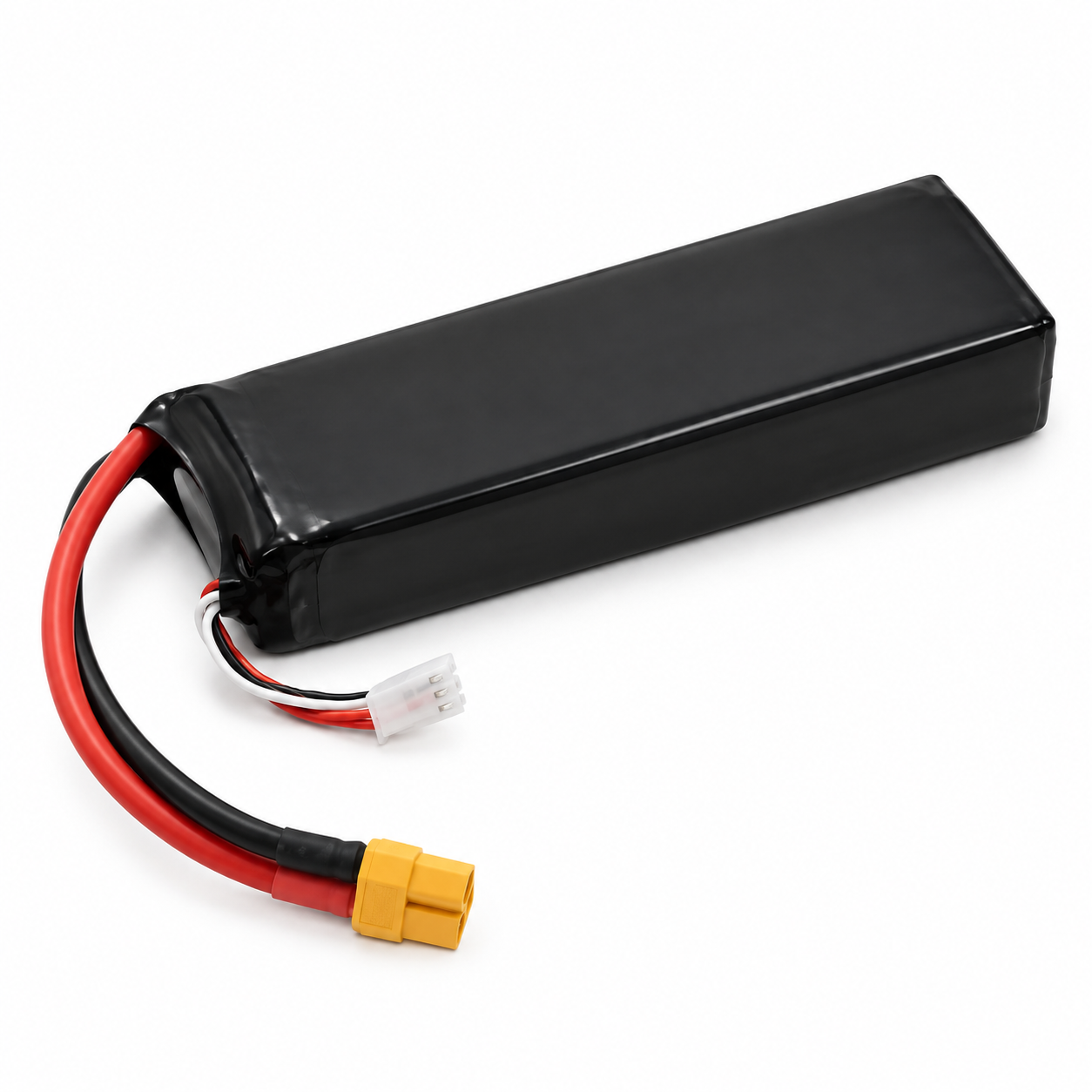
A LiPo battery, or lithium polymer battery, is a type of lithium battery valued for its low weight, compact size and ability to deliver high currents.
LiPo cells are generally available in flexible pouch formats. This design enables the development of compact and lightweight batteries for equipment where available space and onboard weight are limited.
LiPo technology is used in a wide range of professional equipment, including drones, robotics, embedded systems, portable devices, medical equipment and applications requiring a high power-to-weight ratio.
LiPo Battery Advantages
LiPo technology is particularly well suited to professional applications requiring low weight, compact dimensions, high power output and flexible integration.
Lightweight Design
LiPo cells enable the development of lightweight battery packs. This is particularly beneficial for equipment where onboard weight must be kept to a minimum.
Compact Size
The pouch cell format helps minimise the space required and facilitates integration into equipment with limited available space.
High Power Output
Certain LiPo cells can deliver high discharge currents, making them suitable for applications requiring significant peak power.
High Energy Density
LiPo technology allows a significant amount of energy to be stored while maintaining low weight and compact dimensions.
Flexible Integration
Pouch cells are available in a wide range of formats. Battery packs can be designed to meet the dimensional and mechanical requirements of the equipment.
LiPo Battery Applications
Lithium polymer technology is particularly well suited to applications where weight, size and power output are critical requirements. It is especially suitable for embedded, mobile and compact equipment requiring an optimal balance between weight, energy and power.
Here are some examples of applications:



Your LiPo Battery Project
Do you have a question about LiPo technology or specific battery requirements for your application? Our team is available to discuss your requirements regarding weight, power output, battery life and integration.
Contact UsLiPo Battery FAQ
Find answers to the most common questions about LiPo battery technology, selection, sizing, charging, integration and use in professional equipment.
Understanding LiPo Technology
What is a LiPo battery?
LiPo stands for lithium polymer. This technology generally uses flexible pouch cells. It is valued for its low weight, compact size and performance in embedded applications.
What is the voltage of a LiPo cell?
A standard LiPo cell generally has a nominal voltage of approximately 3.7 V. Its maximum charging voltage is often 4.2 V. The exact values must be checked against the specifications of the cell used.
What is the difference between LiPo and NMC batteries?
These terms do not describe exactly the same characteristic. NMC primarily refers to a cathode chemistry, whereas LiPo generally refers to lithium battery technology using flexible pouch cells. You can also visit our page on NMC battery technology.
What is the difference between LiPo and LFP batteries?
LiPo batteries are often selected when weight, size and power output are critical factors. In comparison, LFP technology places greater emphasis on thermal stability, service life and repeated charge and discharge cycles.
Choosing LiPo for Your Application
When should you choose LiPo technology?
LiPo is particularly suitable when weight, size or power output are important constraints. This technology can be used in drones, robotics, medical equipment, embedded systems and other compact professional applications.
Why are LiPo batteries used in drones?
Drones require an energy source capable of delivering high power while keeping weight to a minimum. LiPo technology meets these requirements thanks to its power-to-weight ratio and the high discharge currents available from certain cells.
Can LiPo batteries deliver high discharge currents?
Certain LiPo cells can deliver high currents. Performance depends on the selected cell model, capacity, discharge rate, protection systems, wiring, connectors and thermal management of the battery pack.
Can LiPo batteries be used outdoors?
Outdoor use is possible with suitable integration. Temperature, humidity, vibrations, impacts, enclosure sealing and connector protection must all be taken into account.
LiPo Battery Sizing and Integration
How do you calculate the required capacity of a LiPo battery pack?
Battery sizing starts with the equipment’s power consumption and required operating time. A device consuming 200 W for one hour requires approximately 200 Wh of energy. An additional margin should be included to account for losses, peak power requirements and operating conditions.
What does the C-rate mean for a LiPo battery?
The C-rate indicates the discharge current relative to the cell’s capacity. The actual limits specified by the manufacturer and the battery pack design must always be respected.
What information is required to size a LiPo battery pack?
The main parameters include operating voltage, required energy, operating time, continuous current, peak current, charging time, available dimensions, connectors and operating conditions.
Can a custom LiPo battery be developed?
The number of cells, capacity, format, connectors, protection systems and mechanical integration can be specified according to the technical and mechanical requirements of the equipment.
LiPo Battery Charging, Safety and Integration
Do LiPo batteries require a specific charger?
The charger must be suitable for the number of cells, their maximum charging voltage and the permitted charging current. An incorrect charging voltage can damage the cells.
Is LiPo battery technology safe?
A LiPo battery solution must be correctly sized and protected. The cells are sensitive to overcharging, excessive discharge, high temperatures and mechanical damage. Electrical and mechanical protection systems are essential.
Why can a LiPo cell swell?
Swelling can occur due to ageing, excessive temperature, overcharging, deep discharge or other abnormal operating conditions. A swollen cell must not continue to be used without proper assessment.
Do pouch cells require special integration?
Pouch cells must be securely mounted and protected against impacts, punctures and mechanical stress. Enclosure design is an integral part of battery pack development.
Use, Maintenance and End-of-Life Management
How should a LiPo battery pack be stored when not in use?
The battery pack must be stored according to the cell manufacturer’s recommendations, particularly regarding temperature and state of charge. Extreme temperatures and unsuitable storage conditions should be avoided.
How do you choose between LFP, NMC and LiPo batteries?
The choice depends on the project’s requirements. LFP prioritises long service life and stability, NMC offers high energy density, while LiPo is particularly suitable when weight, format and power output are critical considerations.
How should a LiPo battery be disposed of at the end of its life?
An end-of-life lithium battery must not be disposed of with general waste. It must be directed to an appropriate battery collection and recycling scheme .